

I’m sitting in the parking lot outside Michaels, thinking about you.
Not in a creepy way — in a “I remember exactly what this felt like” way.
If you’ve ever walked into a craft store wanting to learn brush calligraphy, you know the feeling: walls of pens, aisles of paper, and no clue what you actually need. I remember standing there overwhelmed, trying not to waste my money — and then wasting it anyway.


Wrong pens, wrong paper, weeks of frustration.
So today, we’re fixing that.
This is your no-fluff guide to exactly what to put in your basket at Michaels to start modern brush calligraphy — nothing more.
Supplies Needed (and ONLY these!)
To start modern brush calligraphy, you only need two things:
- Tombow Fudenosuke Brush Pen (2-pack: hard tip + soft tip)
- Canson Marker Paper
That’s it. You do not need:
- Calligraphy marker sets
- Chisel-tip pens
- Specialty textured paper
- Fancy starter kits
Let’s break down why.
Rather watch than read? Check out the full video by clicking the video below!
Step 1: The Right Pen (This Is Where Most People Go Wrong)
When you’re in the pen aisle, you’re looking for one word: Brush. Or something that says flexible tip.
In the pen aisle, look for one word: brush (or “flexible tip”).
Avoid anything labeled “calligraphy” or “chisel tip.” Chisel-tip pens are for a different style — beautiful, but not beginner-friendly for modern brush lettering.
The easiest option in the store is the Tombow Fudenosuke 2-pack. You get one hard tip and one soft tip, both with a small brush size that’s much easier to control as a beginner.
You can experiment with larger brush pens later. For now, grab the Fudenosuke pack and move on.

Step 2: The Right Paper (Just as Important)
Next: paper.
Beginners often ruin brush pens by using textured paper. If it feels gritty, skip it.
Look for Canson Marker Paper (purple cover). It’s very smooth, semi-translucent (great for tracing worksheets), affordable, and gentle on brush tips.
On a tighter budget, tracing paper works — it’s just thinner.
Avoid textured sketch pads, watercolor paper, or anything rough. Smooth is the goal.

What This Will Cost You
I bought these two items at full price. Total: $36.14 CAD (likely less in the U.S.).
That’s enough to practice for months. You don’t need upgrades or a giant kit — just the right pen and the right paper.

Why I’m So Specific
Because I wasn’t.
I bought what looked right and blamed myself when my lettering didn’t look good. It wasn’t me — it was the tools.
When you start with beginner-friendly supplies, you can focus on technique instead of fighting your materials.
That’s a Wrap – So What’s Next?
Once you have your pen and paper, you’re ready for basic strokes, pressure control, connecting letters, and forming words.
Modern calligraphy isn’t about talent — it’s about understanding the strokes and practicing them correctly. With the right supplies, that process gets much smoother.
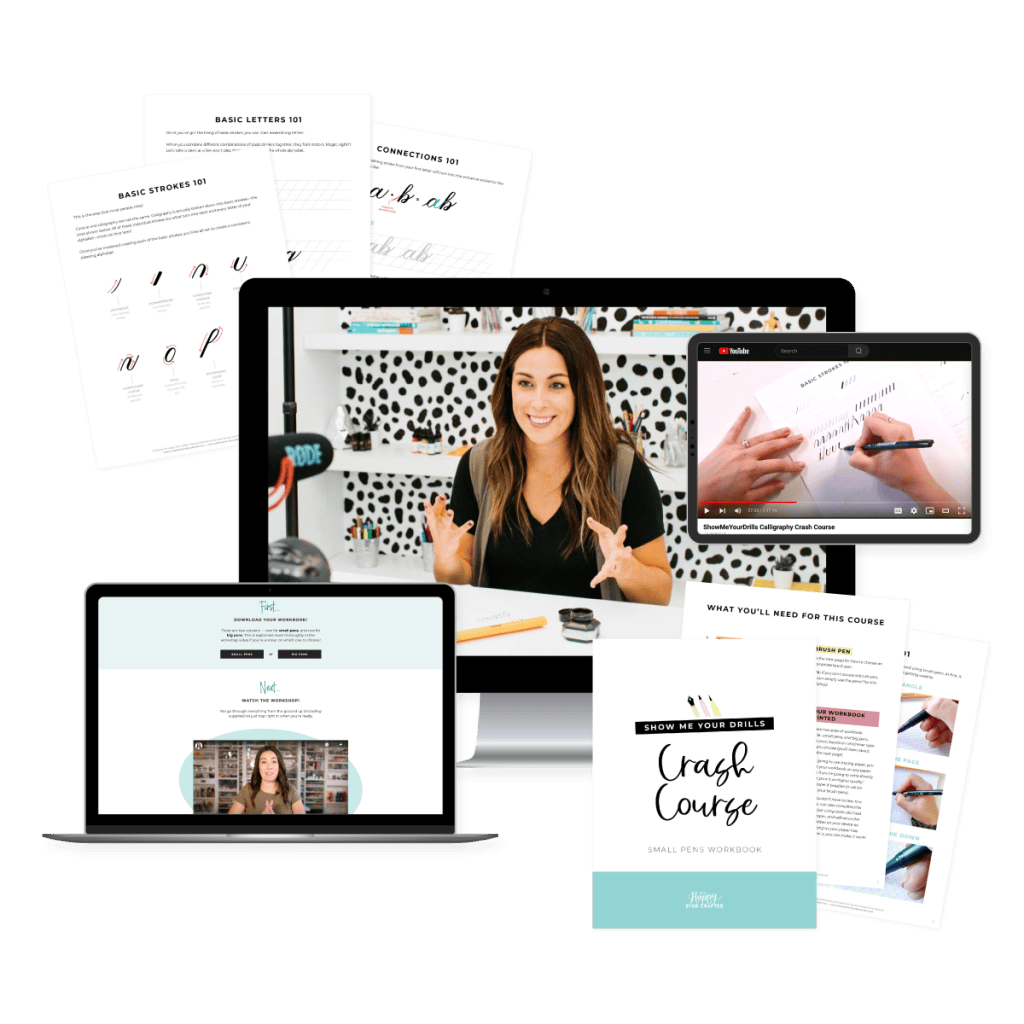
If you’re looking for a beginners calligraphy course, I definitely recommend checking out my ShowMeYourDrills Crash Course. Once you have this crash course and the supplies mentioned in this post, you have everything you need to get started.
And finally, your dad joke…
Someone asked me: “What is the ninth letter of the alphabet?”
It was a complete guess, but I was right.


Comments